Lawrence’s cooling season is a marathon. The first 90-degree days usually show up in April, triple digits arrive by June, and the system may not get a real break until October. The difference between a system that cruises through that and one that dies in the second week of July usually comes down to seven simple steps — most of them inexpensive, all of them worth it.
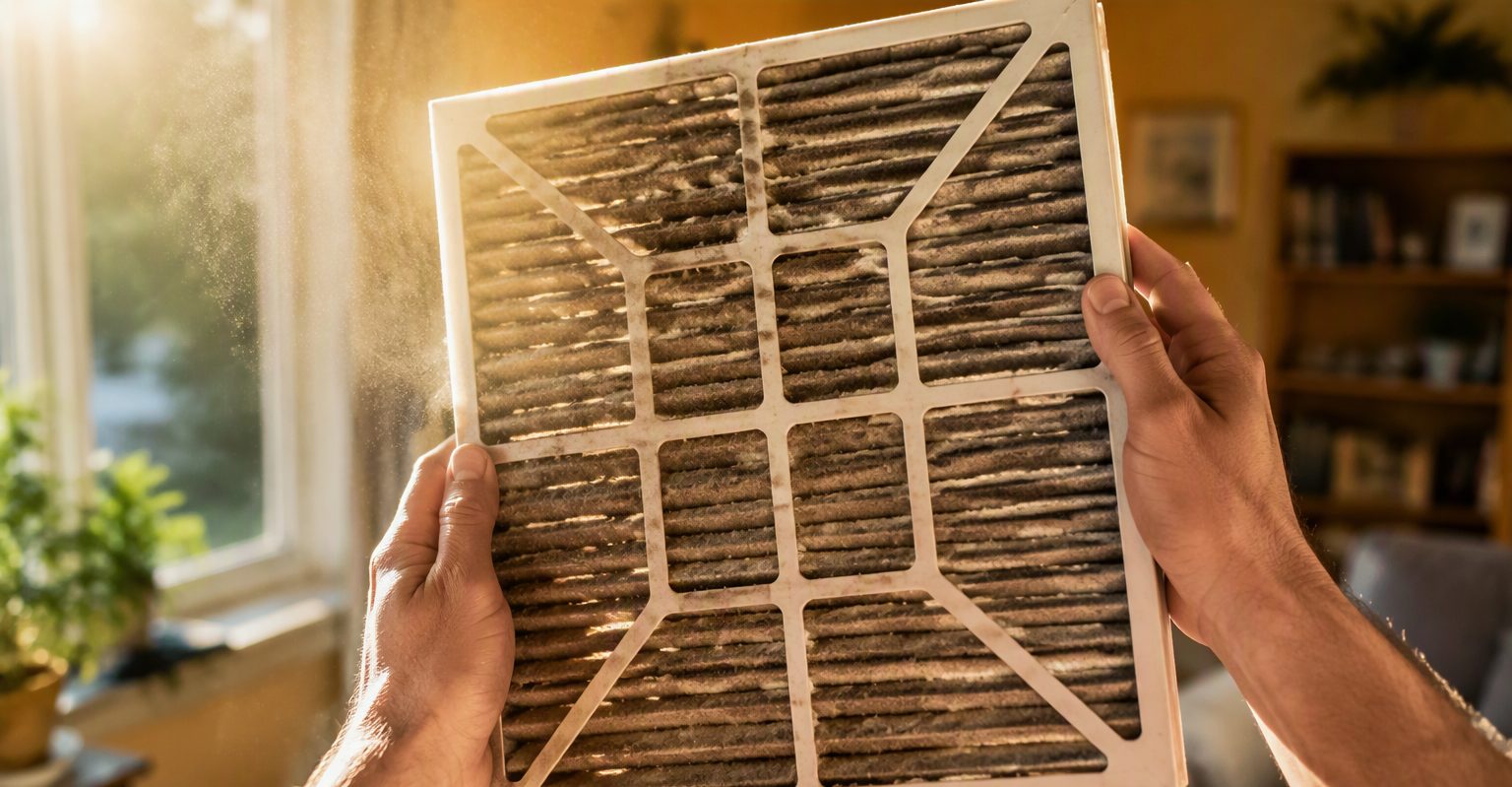
1. Change the filter now
Start the season with a fresh filter, and put recurring reminders in your phone for monthly changes through October. Kaw Valley pollen and dust load filters faster than anywhere else we’ve worked.
2. Clear the unit’s breathing room
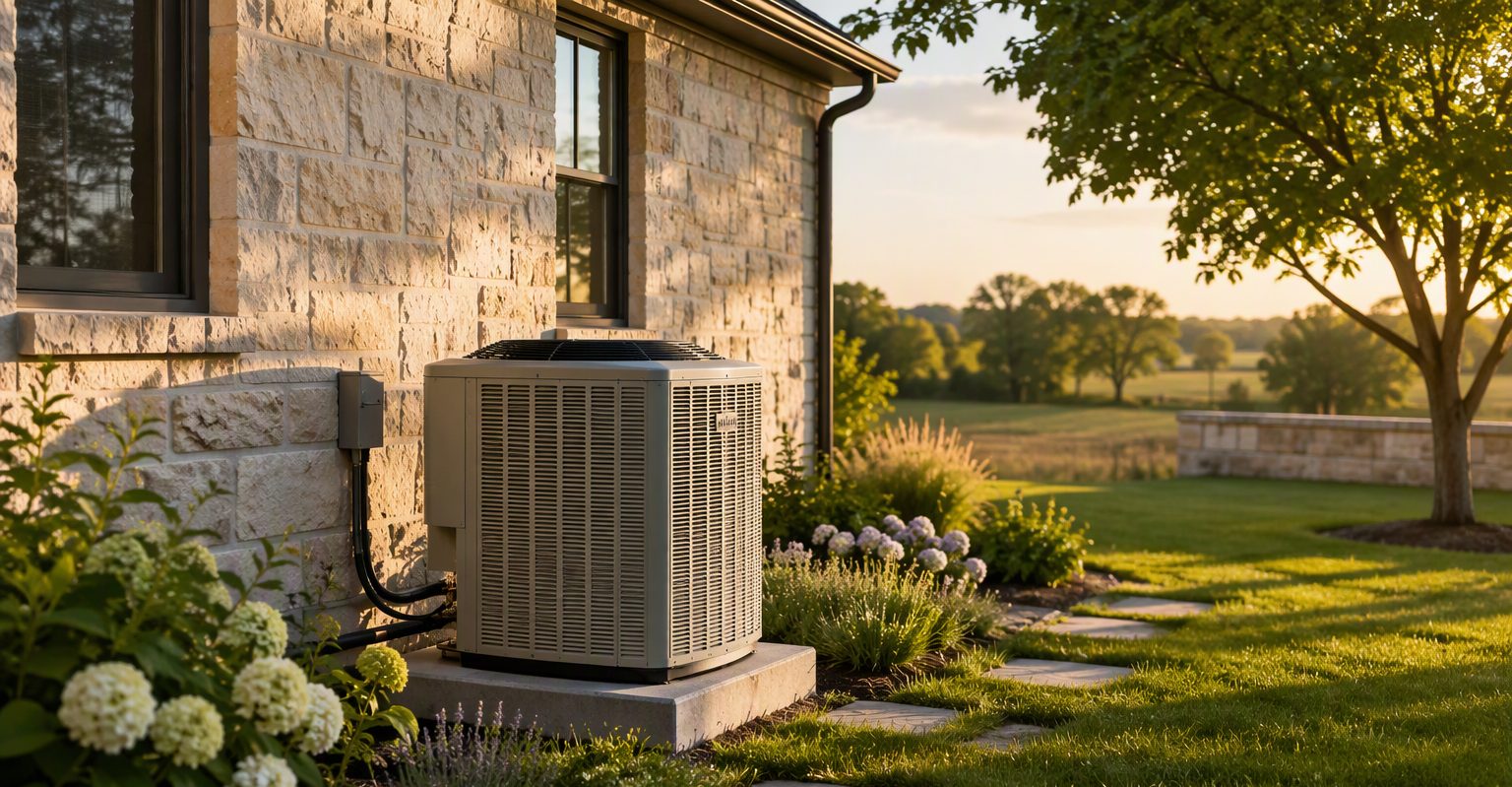
Walk the condenser and clear two feet in every direction — leaves, grass clippings, windblown trash, and the weeds that shot up over winter. The unit can’t reject heat if it can’t breathe.
3. Rinse the coil
With the power off at the disconnect, rinse the condenser coil gently from the inside out with a garden hose. Winter grime and early cottonwood come out brown. Skip the pressure washer — it folds fins and creates the very problem you’re solving.
4. Test before you need it
Pick a mild April afternoon and run the system for 20 minutes. Air from the vents should be cold — about 15 to 20 degrees cooler than the air going in. Weak cooling in April is a repair call at your convenience; weak cooling in July is an emergency.
5. Check the condensate drain
Find the PVC drain line where it exits near the outdoor unit or in the attic, and make sure it drips freely when the AC runs. A cup of vinegar down the access tee discourages the algae that causes mid-summer backups and ceiling stains.
6. Look at the fins after every hailstorm
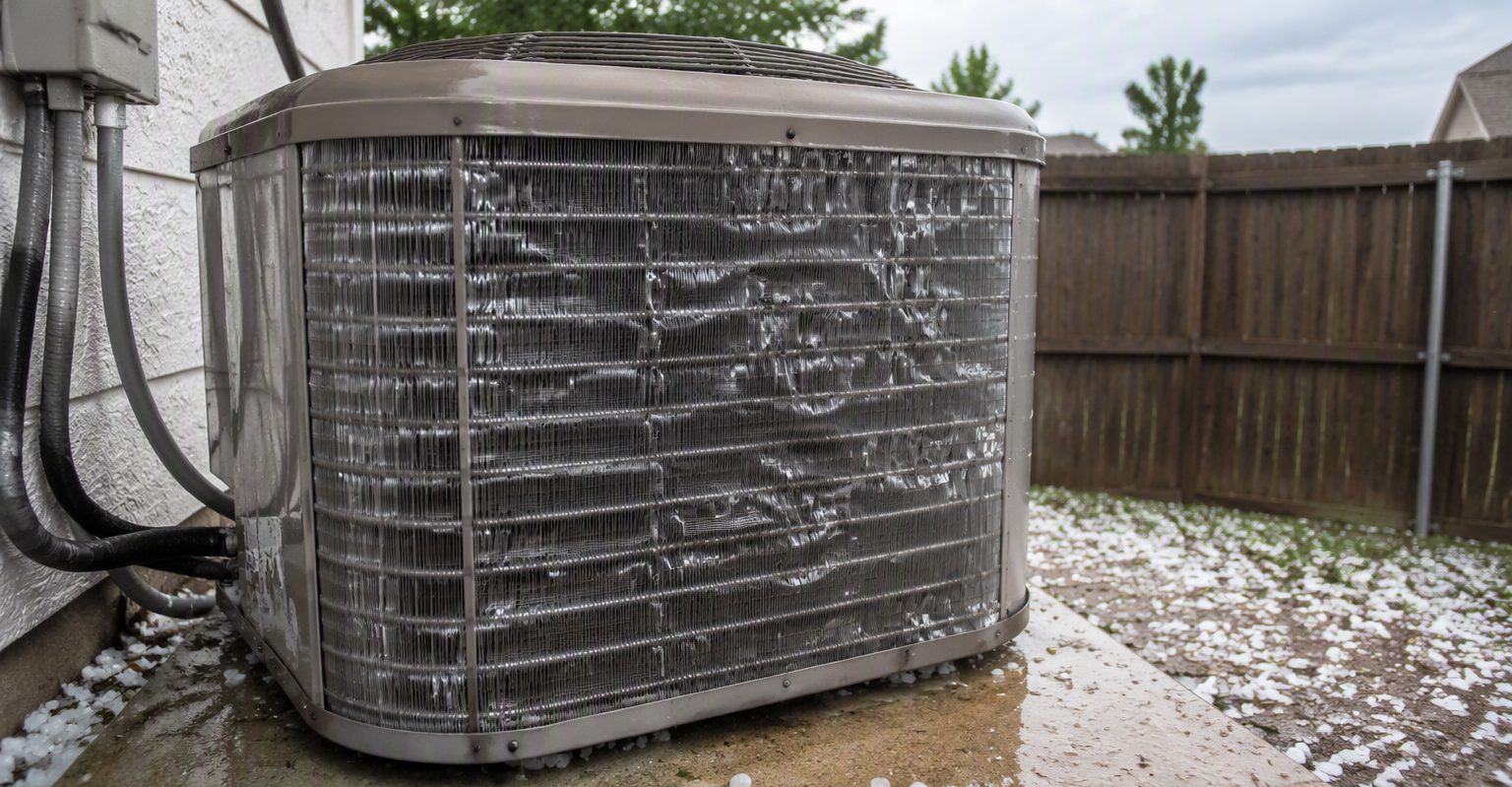
We live in Kansas hail country. After each spring storm, sight across the coil for flattened patches. Minor damage combed out early costs little; ignored damage compounds all summer.
7. Book the professional tune-up
The steps above cover the homeowner’s half. The other half — refrigerant charge verification, capacitor and contactor testing, electrical tightening, airflow measurement — takes gauges and training. A spring tune-up catches the weak capacitor in April instead of at 9 p.m. on a Saturday in July.
Do these seven things and your system goes into summer with its strongest chance. Need a hand with any of them? That’s exactly what the maintenance visit is for.