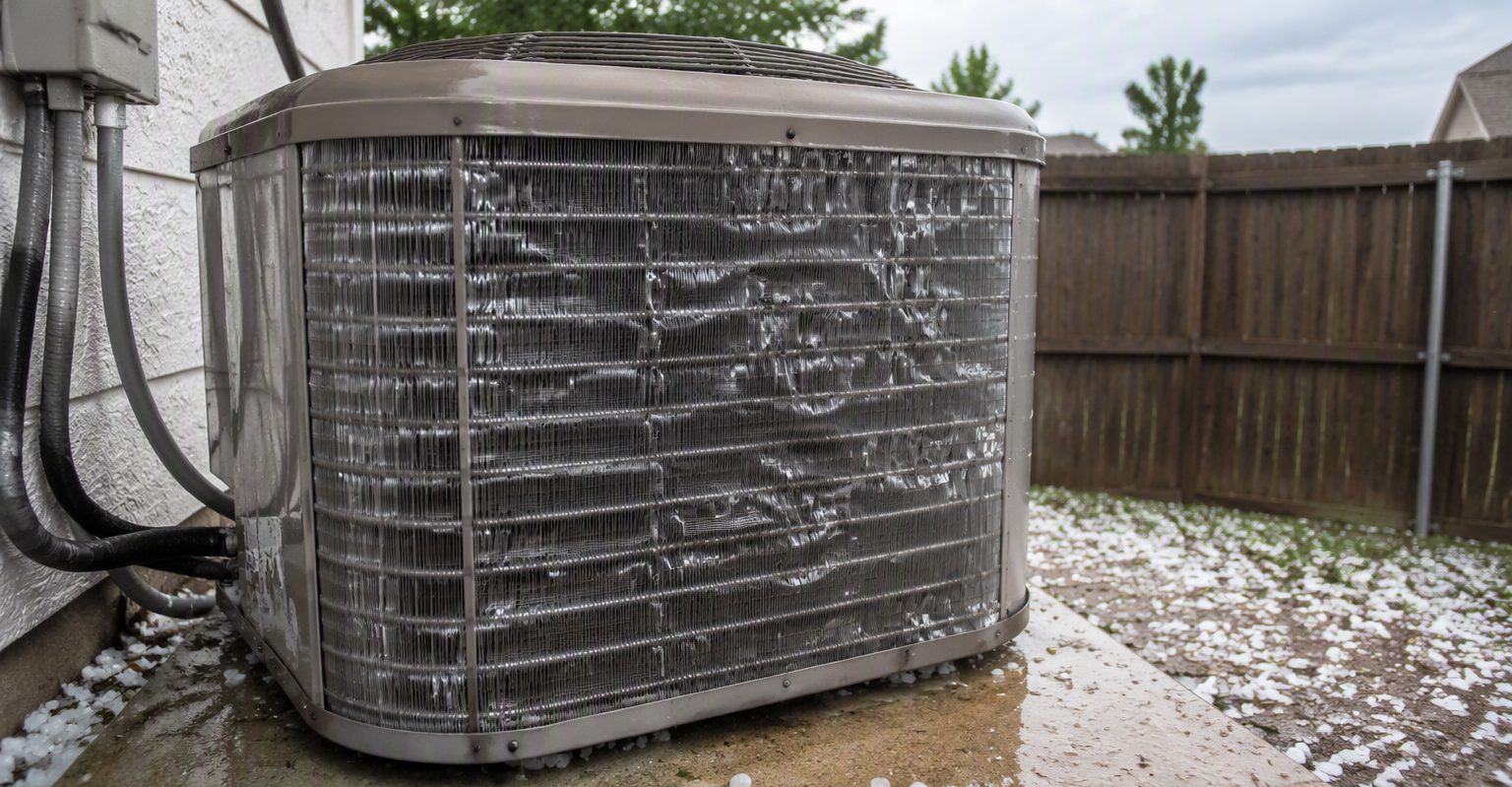
If you’ve lived in Lawrence through one spring, you know the drill: the wind picks up out of the west, the sky goes a strange green, the sirens wind up — and for an hour the weather owns the neighborhood. Supercells and severe thunderstorms are a fact of life on the Kansas River valley, and your air conditioner’s outdoor unit sits in the middle of all of it, pulling wind-driven debris through its fins at full speed.
What storm debris actually does to your system
A condenser works by moving air across hundreds of thin aluminum fins. Cottonwood fluff, shredded leaves, and storm-blown debris pack into the gaps between those fins like felt, and a matted coil can lose a third of its heat-rejection capacity. The system runs longer to do the same work, your Evergy bill climbs, the compressor runs hotter, and parts that should last fifteen years start failing in eight. Debris also works into fan motor bearings and coats electrical contacts — which is why post-storm season is our busiest stretch for fan motor and contactor calls.
The post-storm checklist
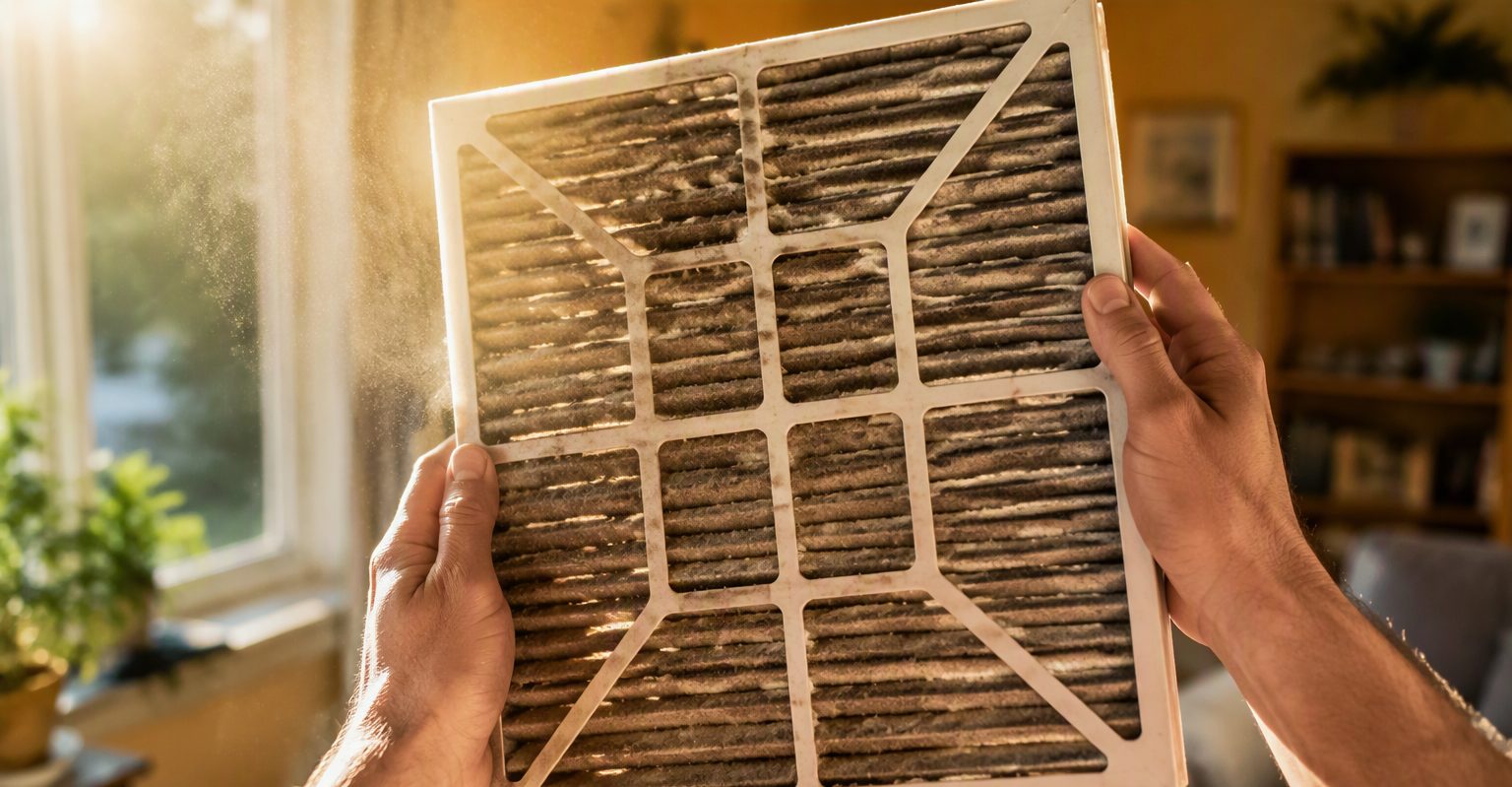
Change the indoor filter. After a major wind event, pull your return filter and look at it. If it’s the color of the driveway, replace it now — don’t wait for the calendar. In storm season, checking monthly is the minimum.
Inspect the outdoor coil. Walk out and look at the condenser fins. If you can’t see daylight through them, or a brown film coats the surface, the coil needs cleaning. A gentle rinse from the inside out with a garden hose helps; a pressure washer does not — it folds the fins flat and makes things worse.
Clear the debris zone. Branches, shingle grit, and windblown trash collect against the unit and block airflow. Keep two feet of clearance on all sides, and check after every big blow.
Listen at startup. New rattles or buzzing after a storm can mean debris in the fan or a loosened panel. Catching it early is a five-minute fix; ignoring it can kill a fan motor.
Watch your cooling. If the house takes noticeably longer to cool after storm season ramps up, the coil is probably loaded. That’s a maintenance visit, not a repair — and it pays for itself in lower bills.
When to call us
If the coil is matted solid, if the unit is making new noises, or if cooling dropped and stayed down, schedule a tune-up. We clean coils from the inside out with the right pressure and the right cleaner, check the motor and electrical side, and get the system back to spec — before the first 100-degree week turns a dirty coil into a dead compressor.