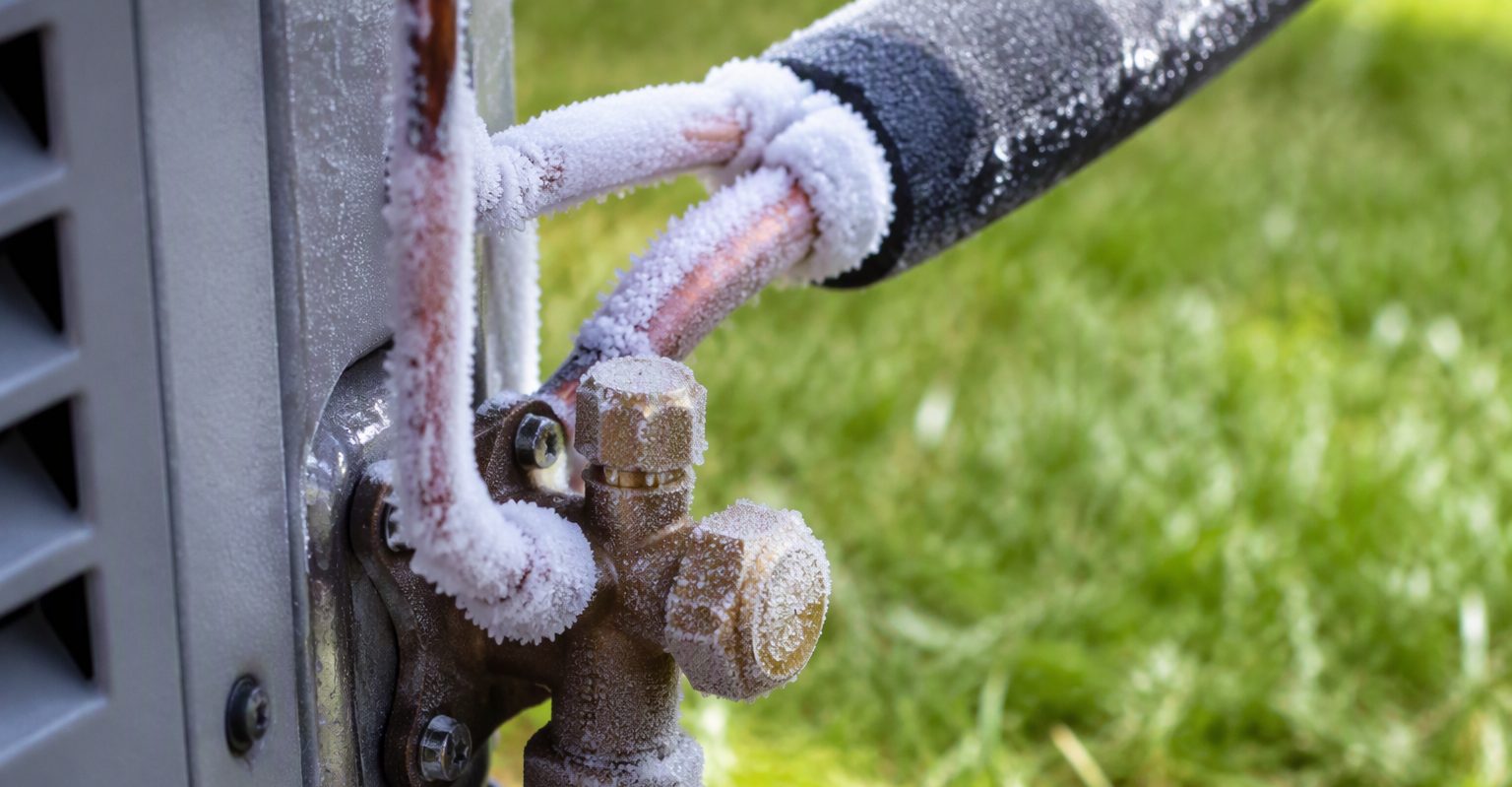
It confuses every homeowner the first time: the hottest day of the year, the AC runs constantly, the house gets warmer and warmer — and the copper lines at the outdoor unit are covered in ice. How does something freeze in a Kaw Valley summer? The answer is basic refrigeration physics, and understanding it can save your compressor.
How a coil freezes in 100-degree heat
Your evaporator coil gets cold by design — normally 35 to 40 degrees, right at the edge of freezing. Airflow from the blower keeps it on the safe side of that line. When airflow drops or refrigerant runs low, the coil temperature slides below freezing, condensation on the fins turns to ice, and the ice insulates the coil further — a death spiral that ends with a solid block of ice and warm air from your vents.
The two causes we find in Lawrence
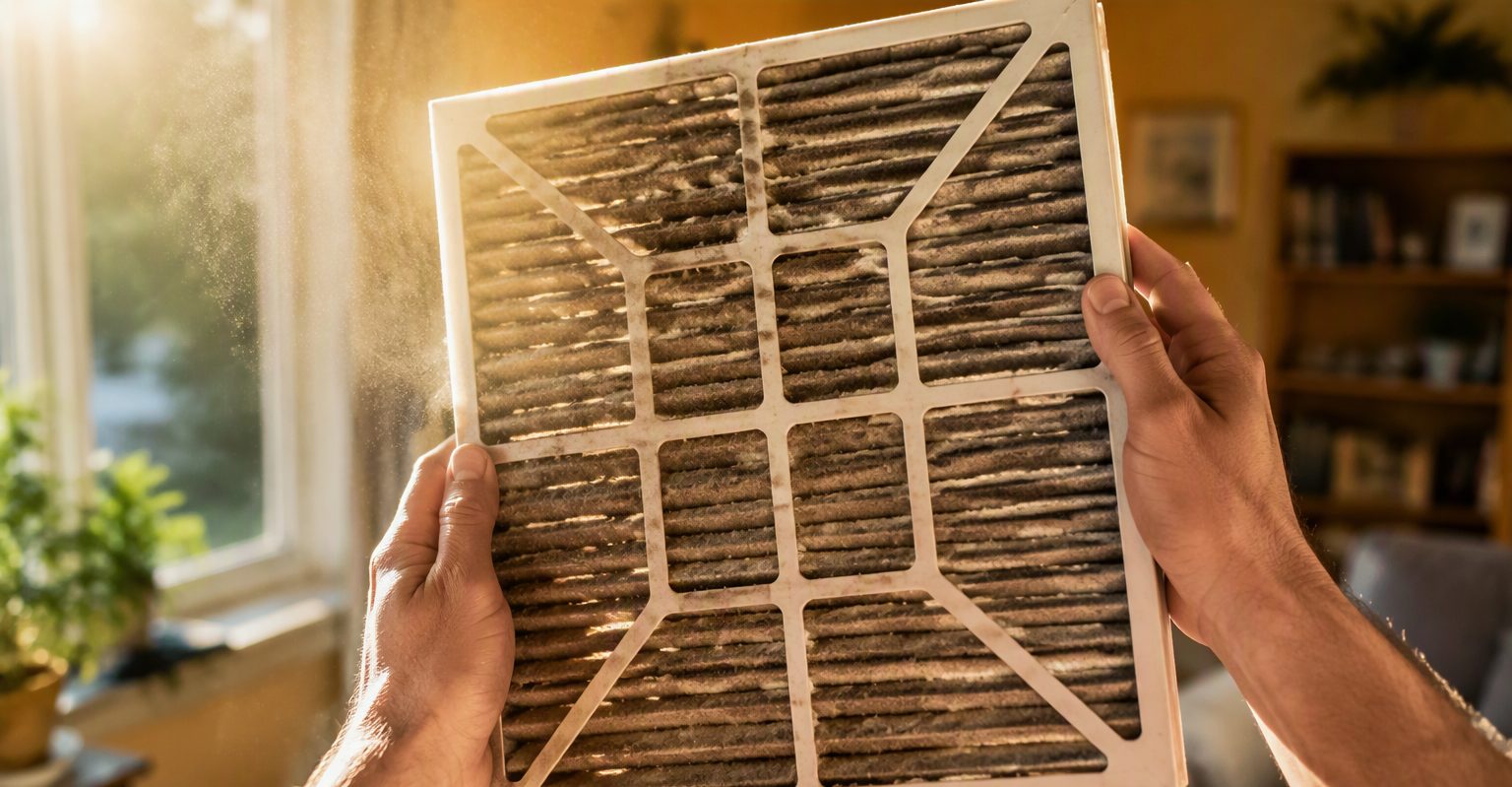
Restricted airflow (about 70% of cases). A filter choked with Kansas River valley pollen, a clogged evaporator coil face, closed or crushed duct runs, or a dying blower motor. In our region, the filter is the first suspect every single time — especially after storm season.
Low refrigerant (about 30%). Refrigerant doesn’t get used up — if it’s low, there’s a leak, usually at a service valve, a rubbing line, or an aging coil. Topping off without finding the leak is money thrown away; the ice will be back in weeks.
What to do right now
Turn the cooling off. Set the thermostat to off and the fan to on — moving air speeds the thaw. A fully iced coil takes 4 to 24 hours to melt completely, and it will dump a lot of water. Put towels around the air handler and watch the drain pan; this is also when clogged drain lines reveal themselves.
Change the filter while it thaws, and make sure no supply or return vents are blocked by furniture or rugs.
Do not chip the ice, and do not restart the system while ice remains. Restarting frozen can slug the compressor with liquid refrigerant — the single most expensive mistake a homeowner can make, turning a $200 fix into a multi-thousand-dollar replacement.
If it freezes again after a full thaw and a fresh filter, the cause is deeper than airflow. That’s when you call us — we’ll find the leak or the restriction and fix the actual problem.